
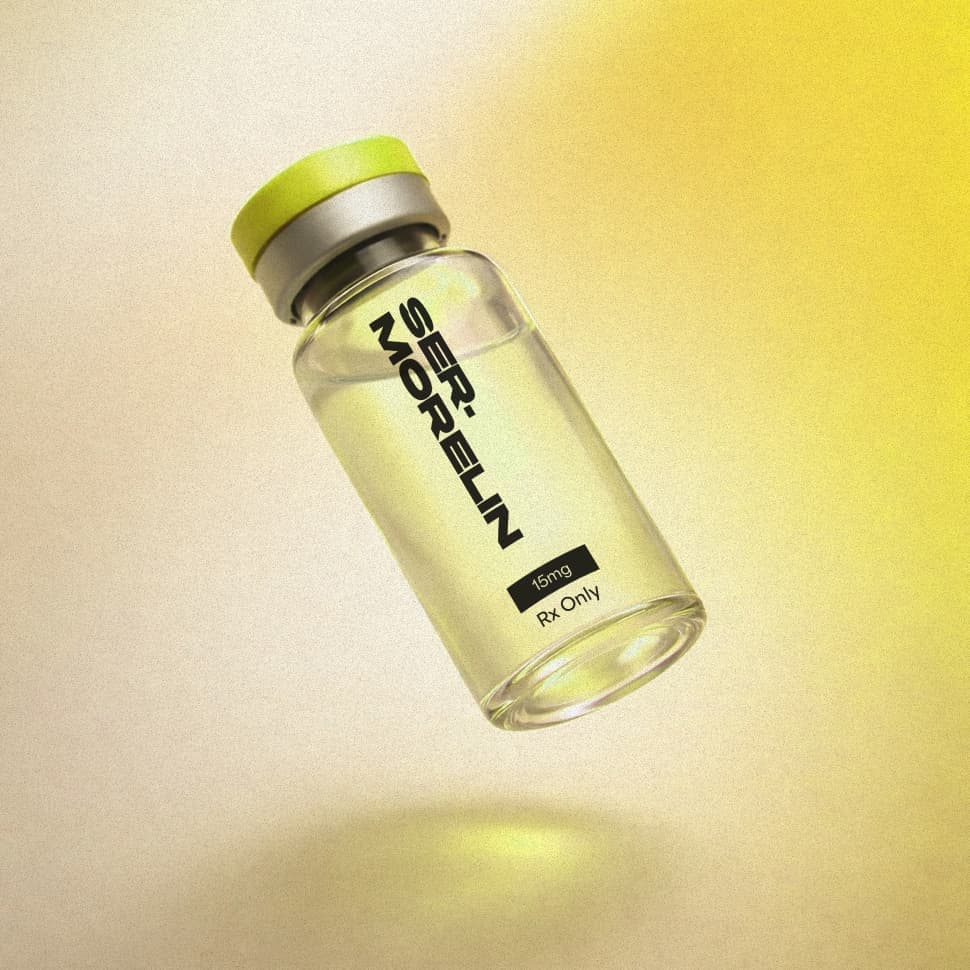
Actual medication label and appearance may vary
Peptide Treatment
Sermorelin
Choose a treatment option
Sermorelin is a synthetic peptide that mimics Growth Hormone Releasing Hormone (GHRH), the natural signal that prompts the pituitary gland to release growth hormone (GH). It acts on GHRH receptors to stimulate the body’s own GH production rather than replacing it directly.
Check eligibilitySermorelin was previously FDA-approved under the brand Geref® for pediatric GH deficiency and was discontinued in 2008 for business reasons—not for safety. All current sermorelin products are compounded and not FDA-approved. Sermorelin is not FDA-approved to diagnose, treat, cure, or prevent any disease or medical illness.
Why it works
Key benefits
- Improved sleep quality and post-exercise recovery
- Support for lean muscle maintenance and modest fat reduction
- Possible improvement in vitality, mood, and cognitive clarity
- May aid tissue repair, metabolic balance, and skin elasticity
Observed in some adults. Effects vary and typically require several weeks of consistent use; benefits are based on limited human data.
Mechanism
How it works
By stimulating the pituitary to release GH, Sermorelin increases downstream production of IGF-1 (Insulin-like Growth Factor-1). These pathways are involved in metabolism, tissue repair, sleep regulation, and recovery. Adult use for wellness, body composition, or “anti-aging” purposes is off-label and supported by limited clinical data.
Frequently asked questions
FAQs
Because Sermorelin acts through natural GH rhythms, improvements develop gradually—often beginning with better sleep and recovery within the first few weeks. Changes in energy, muscle tone, or body composition, when they occur, usually appear after 6–8 weeks of continued therapy.
Most patients tolerate Sermorelin well. Reported effects include: • Temporary redness or irritation at the injection site • Mild headache, flushing, or transient fatigue • Rare vivid dreams, lightheadedness, or mild fluid retention Report persistent headaches, swelling, or joint stiffness to your provider.
Before you begin
Informed Consent & Safety
Report persistent headaches, swelling, or joint stiffness to your provider.
Research & Studies
Evidence at a Glance
- 1.
Walker RF, Rizzoli R. Front Endocrinol (Lausanne) (2021). – Clinical applications of GHRH analogs.
- 2.
Walker RF. J Endocrinol Invest (2006). – Sermorelin in adult GH deficiency and aging.
- 3.
Weltman A et al. J Clin Endocrinol Metab (1994). – GH response to GHRH analogs in adults.
- 4.
Chapman IM et al. J Clin Endocrinol Metab (1996). – Low-dose GHRH stimulates GH secretion.
Interested in Sermorelin?
Take a short assessment and a licensed provider will review if this treatment is right for you.
Clinical Guidance Disclaimer
The information provided in this document is for educational and informational purposes only and is not intended as a substitute for professional medical advice, diagnosis, or treatment. It should never replace sound clinical judgment or personalized advice of a qualified healthcare professional. Always seek the advice of your physician or other qualified health provider with any questions you may have regarding a medical condition or treatment protocol. Never disregard professional medical advice or delay in seeking it because of something you have read in these materials.
Liability & Indemnification
By utilizing this information, the user acknowledges and agrees that REBL and its affiliates, providers, and staff are not liable for any direct, indirect, or consequential damages resulting from the use or misuse of the information provided herein. Any reliance on the materials contained in this document is solely at the user's own risk.
Proprietary Rights & Use Restrictions
This document and its contents are the proprietary property of REBL. Unauthorized use, duplication, reproduction, or distribution of these materials—in whole or in part—without express written consent is strictly prohibited.