
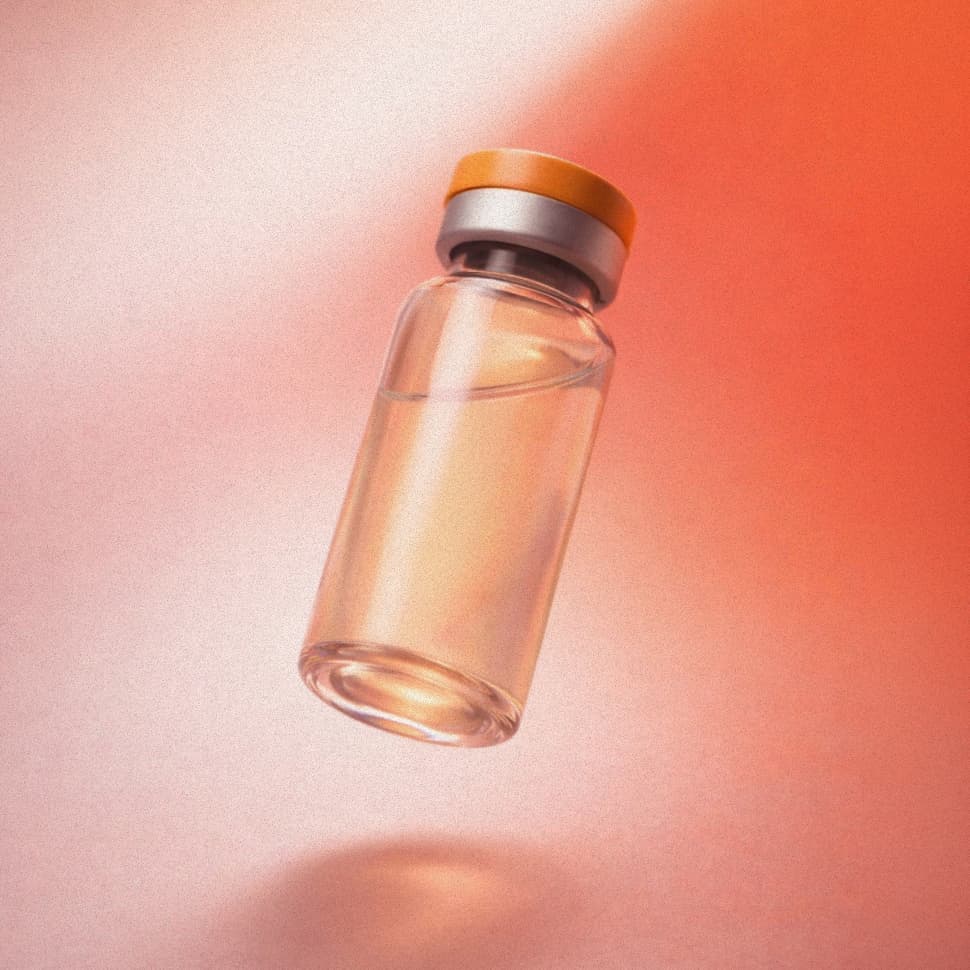
Actual medication label and appearance may vary
Peptide Treatment
Glow Blend
Choose a treatment option
The Glow Blend is a synergistic peptide formulation combining BPC-157, TB-500, and GHK-Cu. This blend is designed to support systemic tissue repair, reduce inflammation, and enhance skin vitality by stimulating collagen and elastin production. This combination is used in wellness and regenerative protocols to promote recovery and dermal resilience.
Check eligibilityThe Glow Blend is not FDA-approved to diagnose, treat, cure, or prevent any disease or illness.
Why it works
Key benefits
- Dermal Vitality: Improved skin elasticity, firmness, and a reduction in the appearance of fine lines.
- Tissue Repair: Support for the recovery of soft tissues, including tendons, ligaments, and muscle.
- Systemic Anti-Inflammatory: Reduction in localized inflammation and joint discomfort.
- Collagen Support: Enhanced structural integrity of the skin and connective tissue matrix.
Based on preclinical and clinical observation
Mechanism
How it works
BPC-157: A synthetic peptide that mirrors a protein found in human gastric juice. It promotes the healing of muscles, tendons, and ligaments by enhancing blood flow (angiogenesis) to injured sites. TB-500 (Thymosin Beta-4): A naturally occurring protein that facilitates cell migration and the formation of new blood vessels, helping damaged tissue regain flexibility and function. GHK-Cu (Copper Peptide): A copper-binding peptide that stimulates the synthesis of collagen and elastin while providing potent antioxidant and anti-inflammatory support for the skin and connective tissues.
Frequently asked questions
FAQs
Subtle improvements in recovery and skin texture may be noticed within 1–2 weeks. Visible changes in skin firmness and elasticity typically require 4–8 weeks of consistent use to align with natural cellular turnover and collagen remodeling cycles.
The Glow Blend is generally well-tolerated. Potential effects may include: Temporary redness, itching, or irritation at the injection site. Mild headache or transient fatigue. Rare: Nausea or lightheadedness.
Research & Studies
Evidence at a Glance
- 1.
Pickart, L., & Margolina, A. (2018). Regenerative and protective actions of the GHK-Cu peptide in the light of the new gene data. International Journal of Molecular Sciences, 19(7), 1987.
- 2.
Sikiric, P., et al. (2020). Toxicity by NSAIDs. Counteraction by BPC 157. Current Pharmaceutical Design, 26(25), 2993–3007.
- 3.
Smart, N., et al. (2011). Thymosin β4 and angiogenesis: Mode of action and therapeutic potential. Annals of the New York Academy of Sciences, 1212(1), E25–E38.
- 4.
Gajovic, S., et al. (2023). BPC-157 clinical translation in musculoskeletal and sports medicine. Frontiers in Pharmacology, 14.
Interested in Glow Blend?
Take a short assessment and a licensed provider will review if this treatment is right for you.
Clinical Guidance Disclaimer
The information provided in this document is for educational and informational purposes only and is not intended as a substitute for professional medical advice, diagnosis, or treatment. It should never replace sound clinical judgment or personalized advice of a qualified healthcare professional. Always seek the advice of your physician or other qualified health provider with any questions you may have regarding a medical condition or treatment protocol. Never disregard professional medical advice or delay in seeking it because of something you have read in these materials.
Liability & Indemnification
By utilizing this information, the user acknowledges and agrees that REBL and its affiliates, providers, and staff are not liable for any direct, indirect, or consequential damages resulting from the use or misuse of the information provided herein. Any reliance on the materials contained in this document is solely at the user's own risk.
Regulatory Status
The Glow Blend is a compounded peptide formulation prepared by licensed pharmacies. These peptides are considered investigational and are not FDA-approved for human use or the treatment of any medical condition.
Proprietary Rights & Use Restrictions
This document and its contents are the proprietary property of REBL. Unauthorized use, duplication, reproduction, or distribution of these materials—in whole or in part—without express written consent is strictly prohibited.